TL;DR: Crawl space mold remediation in Sioux Falls typically costs $1,500 to $8,000 or more. The biggest price swings come from crawl space height, how much structural wood is affected, and whether you add a vapor barrier or full encapsulation. A small patch of surface mold on a dry dirt floor sits at the low end. A damp, uninsulated crawl space with rotted joists and no vapor barrier can push well past $10,000 once drainage and encapsulation get added.
If a home inspector flagged mold in the crawl space during a Sioux Falls sale, or a musty smell has been rising through the floor vents in your McKennan Park bungalow for months, you’re probably holding an estimate right now and wondering if the number is normal. Crawl space jobs price differently than any other mold remediation because the cost depends less on square footage and more on headroom, access, and how long the moisture problem went unnoticed. Here’s what actually sets the price for homes in Sioux Falls and the surrounding Sioux River valley.
How much does crawl space mold remediation cost in Sioux Falls, SD?
Most Sioux Falls crawl space mold jobs fall between $1,500 and $8,000, with full encapsulation projects running higher. The table below breaks out typical scopes, based on industry-standard pricing for this type of work; your actual quote depends on inspection findings.
| Scope | Typical cost range |
|---|---|
| Spot treatment, surface mold under 200 sq ft, dry crawl space | $500 - $1,500 |
| Full remediation, 500-1,000 sq ft, moderate growth on joists | $1,800 - $4,500 |
| Remediation plus new 6-mil vapor barrier | $2,500 - $5,500 |
| Full encapsulation (sealed vents, insulated rim joist, dedicated dehumidifier) | $5,500 - $13,000 |
| Remediation plus sump pump or drain tile addition | $6,000 - $15,000 |
| Remediation plus structural wood repair (rotted joists, subfloor) | $8,000 - $20,000+ |
These ranges cover the Sioux Falls metro and nearby towns like Brandon, Harrisburg, and Tea. A specific written scope, built off an actual crawl space inspection, is the only way to know where your project lands. For the general mold remediation cost breakdown across other areas of a home, see Mold Remediation Cost in Sioux Falls, SD; this guide focuses specifically on the crawl space scenario, which prices differently.
What drives the price up or down?
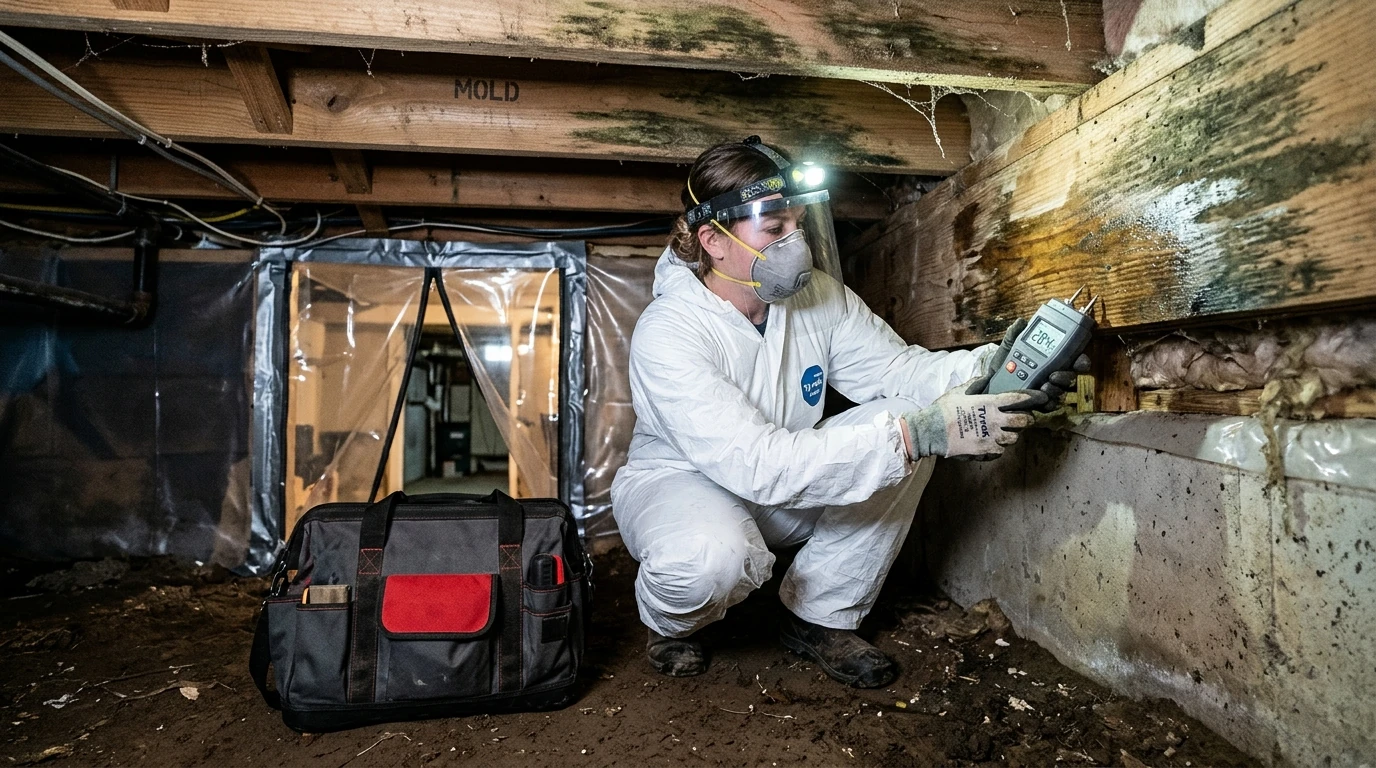
Crawl space headroom is usually the single biggest cost factor, not square footage. A 24- to 30-inch crawl space forces crews to work on their stomachs or in a low crouch, which slows every step down and raises labor hours compared to a walk-in basement.
Beyond access, a few things move the number:
- Extent of contamination. Surface growth on a vapor barrier or ductwork wipes off faster and cheaper than mold that’s colonized structural wood, where sanding, HEPA vacuuming, and antimicrobial treatment take longer.
- Whether the moisture source is known. Crawl space mold almost always traces back to a specific cause: a plumbing leak, poor grading, a missing or torn vapor barrier, or high humidity pulling through open foundation vents. Finding that source with water leak detection before remediation starts keeps the mold from coming right back.
- Encapsulation versus a basic vapor barrier. A new 6-mil poly sheet over the dirt floor is a baseline fix. Full encapsulation, sealed and insulated rim joists, foam-sealed vents, a dedicated dehumidifier, adds real cost but solves the humidity problem long-term rather than just covering the floor.
- Drainage. Crawl spaces near the Big Sioux River or in low-lying lots sometimes need a sump pump or interior drain tile added before encapsulation makes sense. Skipping that step on a wet lot usually means redoing the work within a year or two.
Homes in older Sioux Falls neighborhoods like Cathedral Historic District and All Saints often have shallower, less-ventilated crawl spaces than newer builds in Prairie Green, which tends to push labor costs higher even on a comparable square footage job.
Will homeowners insurance cover crawl space mold remediation?
Usually not, because crawl space mold almost always comes from gradual moisture, humidity, poor drainage, or a slow seep, not a sudden, accidental event. Standard homeowners policies generally exclude damage from long-term seepage and poor maintenance, and most cap mold coverage even when it is included.
The exception is when the mold followed a specific sudden covered loss, like a supply line that burst and soaked the crawl space overnight. Even then, many policies apply a mold sub-limit separate from the main claim amount. Check your policy’s mold endorsement and declarations page before assuming either way; see Does Homeowners Insurance Cover Mold? for how South Dakota policies typically handle this, and the EPA’s mold cleanup guidance for why prompt moisture control matters regardless of coverage.
What does crawl space mold remediation actually involve?
The work follows a set sequence, roughly matching the ANSI/IICRC S520 mold remediation standard most reputable crews in Sioux Falls work to.
- Inspection and moisture source ID. A technician checks moisture readings, humidity levels, and looks for the leak, grading issue, or vent problem causing the moisture.
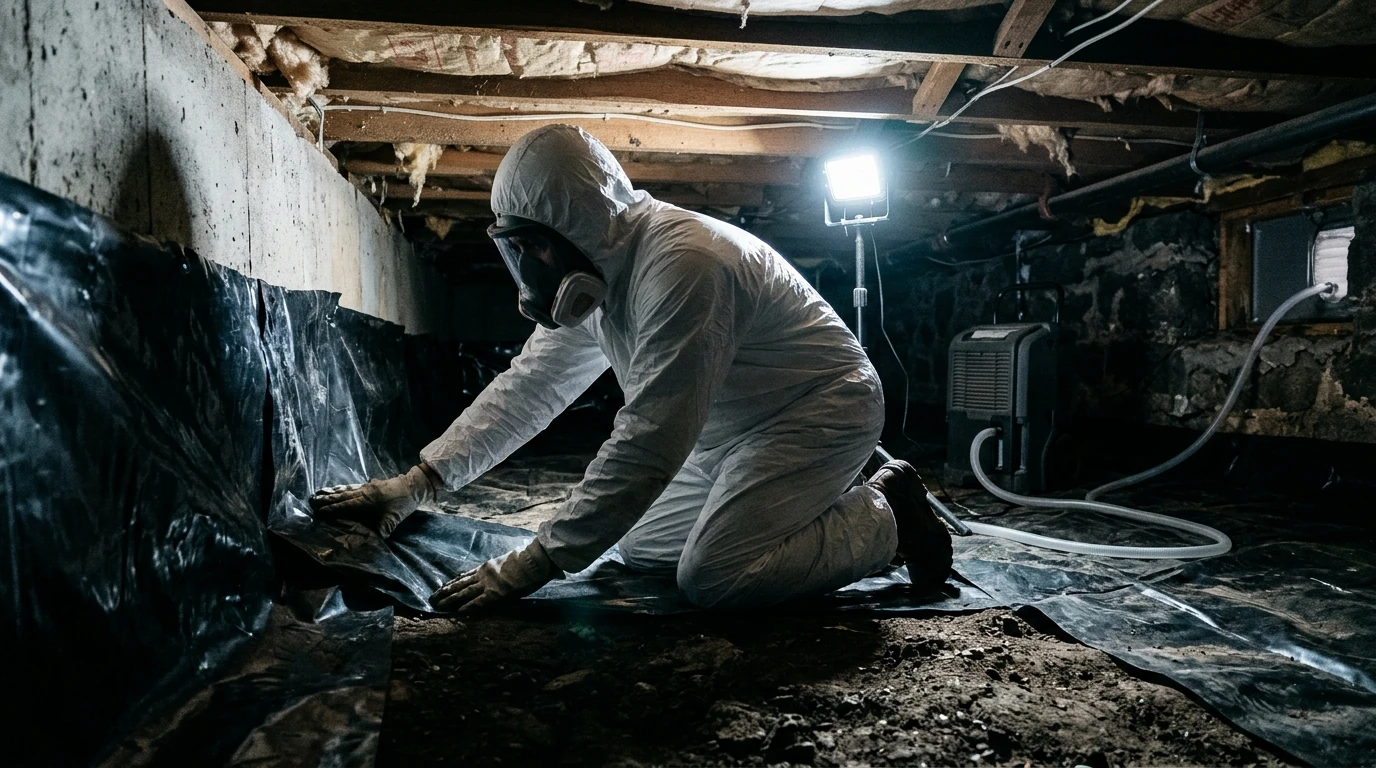
- Containment. Poly sheeting seals off the crawl space access point and any adjacent living space openings; a negative air machine with a HEPA filter keeps spores from migrating upward.
- Removal of contaminated materials. Mold-affected insulation, damaged vapor barrier, and any porous debris get bagged and removed rather than treated in place.
- Cleaning and antimicrobial treatment. Structural wood gets HEPA vacuumed and treated. Surface growth on joists and subfloor is removed by sanding, media blasting, or wire brushing depending on severity.
- Drying. A portable dehumidifier runs until moisture readings in the wood framing return to normal range.
- Encapsulation, if included. New vapor barrier, sealed vents, and insulation go in to prevent the moisture from coming back.
- Verification. A visual check confirms the work; some homeowners add a third-party clearance test for documentation, especially ahead of a home sale.
If hidden mold is suspected but hasn’t been confirmed, 7 Signs You Have Hidden Mold covers what to look and smell for before paying for an inspection.
What should I do next?
Start with a crawl space inspection, not a remediation quote, since the moisture source determines what the job actually needs. A technician who finds and fixes the leak or drainage issue first saves you from paying for remediation twice.
Crew Restoration & Construction answers calls around the clock and can send a technician to inspect a Sioux Falls crawl space, identify the moisture source, and put together a written scope before any work starts. Call Crew Restoration & Construction at (605) 965-2727 to schedule that assessment.
Every crawl space is different, and the range above is a starting point, not a quote. A written scope after an in-person inspection is the only number worth planning a budget around.
About Crew Restoration & Construction
Crew Restoration & Construction is an IICRC-certified company (license #3814) that has served Sioux Falls, SD and the surrounding region since 2015. Their crews handle mold remediation, mold inspection and testing, water leak detection, and water damage restoration throughout the Sioux Falls metro and nearby communities. Crew answers calls 24/7 and holds a 4.9-star Google rating across more than 630 reviews.
Video Transcript
Found mold in your Sioux Falls crawl space? Wondering if your estimate is fair? Here’s what actually drives the price. Most crawl space mold jobs here run one thousand five hundred to eight thousand dollars, with full encapsulation pushing higher depending on damage. Headroom matters more than square footage. A cramped crawl space forces crews to work on their stomachs, slowing everything down and raising labor costs. A hidden leak, poor grading, or torn vapor barrier keeps mold coming back until your contractor finds and fixes it. Wondering if insurance covers this? Usually not, since crawl space mold typically comes from gradual moisture, not a sudden covered event. If a burst pipe caused the damage overnight, your policy might help. Check your declarations page, and keep documentation to support any claim. Remediation starts with inspection and moisture testing, then containment with sealed plastic sheeting and HEPA air filtration to stop spores from spreading. Next, your contractor removes contaminated insulation and treats affected wood, then adds a vapor barrier or full encapsulation to keep humidity out for good. Every crawl space is different, so a written scope based on a real inspection shows your actual cost. Ready for an honest assessment of your crawl space? Call Crew Restoration & Construction at (605) 965-2727 to schedule an assessment.