In Sioux Falls, SD, attic mold remediation typically costs $450 to $8,000, depending on how much of the attic is affected and whether an ice dam, poor ventilation, or a misrouted bath fan caused the problem. A small patch of surface mold on sheathing near one soffit bay often runs under $900. A full attic with mold across the rafters, roof sheathing, and insulation, paired with a ventilation correction, can run $4,000 to $8,000 or more.
Older homes around McKennan Park and the Cathedral Historic District, with tighter roof lines and soffits that were never built with much intake air in mind, see this more often than newer construction out toward Prairie Green. Either way, the pattern in Sioux Falls is almost always the same: a cold roof deck, trapped humidity, and months of freeze-thaw cycles doing their work unseen above the insulation.
What Drives the Cost of Attic Mold Remediation?
The price comes down to three things: how much square footage is affected, whether porous materials like sheathing or insulation have to come out, and whether the root cause (ice damming, a dead bath fan vent, or blocked soffits) needs a physical fix on top of the cleanup. A crew that only wipes down mold without correcting the moisture source is setting the job up to fail within a year.
Containment and access also matter. Attics with blown-in insulation, low clearance, or knob-and-tube wiring from an older remodel take longer to work in safely, which shows up in labor cost. Most companies price attic mold work per square foot of affected surface, with typical industry ranges running $2 to $7 per square foot depending on containment difficulty and whether materials are removed or treated in place.
| Scenario | Typical Cost Range |
|---|---|
| Small isolated patch (under 10 sq ft, sheathing only) | $450 - $900 |
| Moderate attic mold (10-30 sq ft, near a vent or fan) | $900 - $2,200 |
| Widespread mold across rafters and sheathing | $2,200 - $4,500 |
| Remediation plus insulation removal/replacement | $3,000 - $6,500 |
| Remediation plus sheathing repair or replacement | $4,000 - $8,000 |
| Added ventilation or ice dam correction (soffit, ridge vent, bath fan reroute) | $1,500 - $4,000 on top of remediation |
See our general mold remediation cost guide for how these numbers compare to basement and living-space jobs, which price differently than attic work.
Why Do Sioux Falls Attics Grow Mold in the First Place?
Most attic mold here traces back to one of three causes: ice dams forcing meltwater under the shingles, soffit and ridge vents that aren’t actually moving air, or a bathroom exhaust fan ducted straight into the attic instead of outside. All three create the same thing mold needs: sustained moisture on a cold, poorly ventilated surface.
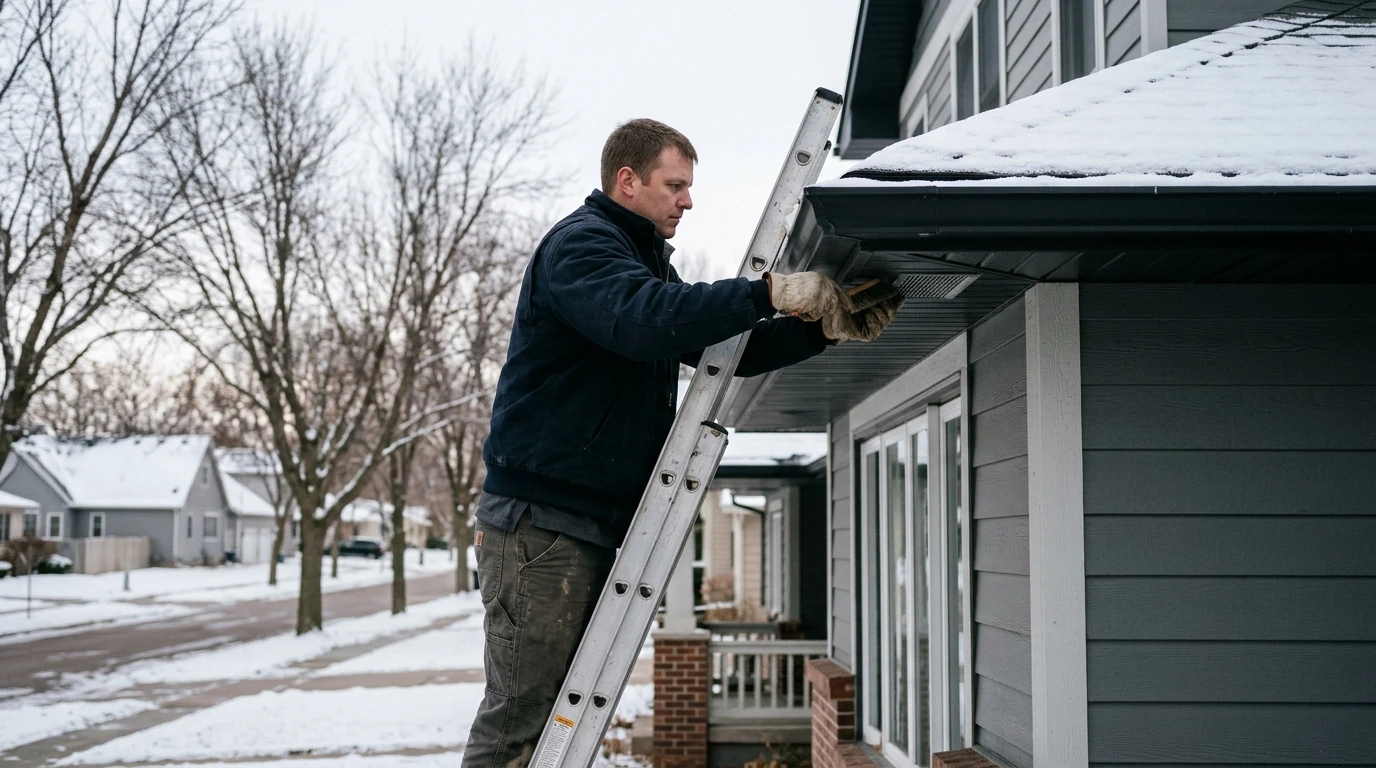
Ice dams form when attic heat escapes to the roof deck, melts snow near the ridge, and that water refreezes at the cold eaves. The dam backs up meltwater under the shingles, where it soaks the sheathing below. One season of this rarely causes mold. Three or four winters of repeated soaking usually does. If you’ve already noticed staining or icicles at your eaves, our ice dam removal cost guide covers what that service runs separately from mold cleanup.
Ventilation problems are quieter but just as common. Building codes call for a balanced ratio of soffit intake to ridge or gable exhaust, something the International Code Council standards address directly. In a lot of older Sioux Falls homes, insulation has been blown in over the soffit vents over the years, choking off intake air even though the vents are still physically there.
Bath fan venting is the one homeowners are least likely to catch on their own. A fan that terminates inside the attic, instead of through a roof or wall cap outside, dumps warm, humid bathroom air directly onto cold framing every time someone showers. That moisture condenses on the underside of the roof deck and on nearby insulation, and mold shows up as dark speckling, usually right above the bathroom it’s venting from.
Does Homeowners Insurance Cover Attic Mold?
Homeowners insurance typically covers attic mold only when it results from a sudden, covered event, such as an ice dam that caused a sudden roof leak, not from gradual humidity buildup or a long-standing ventilation problem. Insurers generally treat slow condensation damage as a maintenance issue, which falls outside standard coverage.
Mold coverage itself is often capped at a set dollar amount even when the underlying cause was covered, and most policies exclude mold tied to wear and tear entirely. If you’re filing a claim, document the attic with photos before any cleanup starts and get a written scope from your contractor. Our guide to mold coverage under South Dakota homeowners policies walks through what adjusters typically ask for.
What Happens During Attic Mold Remediation?
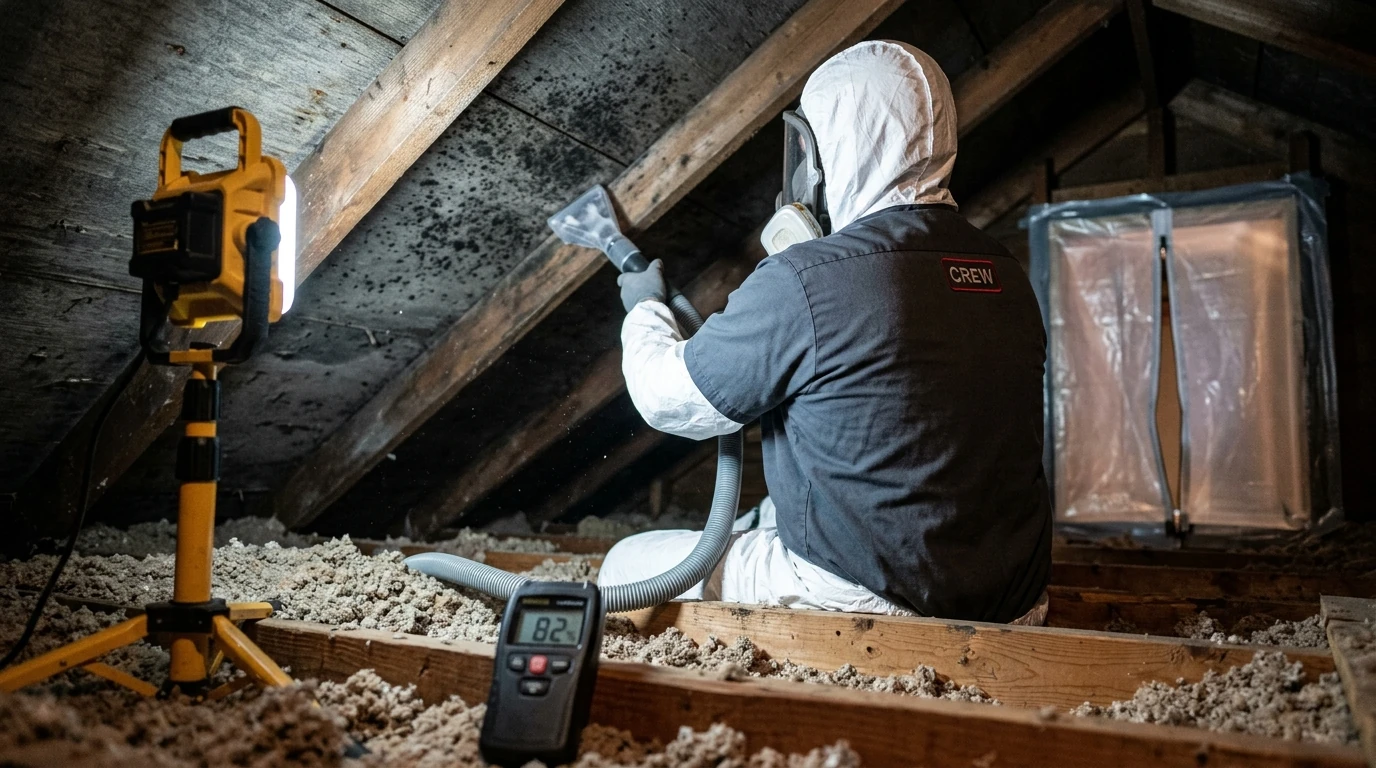
Attic mold remediation follows the same core sequence everywhere, laid out in the ANSI/IICRC S520 standard: inspect, contain, remove, treat, dry, verify. Here’s what that looks like in an attic specifically:
- Inspection and moisture mapping. A technician checks moisture content in the sheathing and rafters, not just the visible mold, to see how far the problem extends.
- Containment. Poly sheeting seals off the attic access point and HVAC returns so spores don’t spread into living space during work.
- Removal. Crews HEPA-vacuum loose spore growth, media-blast or sand affected sheathing, and bag out any insulation that’s absorbed moisture.
- Antimicrobial treatment. Remaining surfaces are treated to address residual spores the physical cleaning didn’t remove.
- Drying. Air movers and a dehumidifier run until moisture readings on the wood framing return to normal.
- Source correction. This is where soffit and ridge venting get opened back up, a misrouted bath fan gets redirected outside, or ice dam-prone roof sections get addressed, per the EPA’s mold cleanup guidance on fixing the moisture source, not just the mold.
- Insulation replacement. If insulation was removed, it’s replaced to current depth, and R-value is usually restored or improved as part of the job.
Skipping step six is the single biggest reason attic mold comes back. A clean attic with the same bad ventilation or the same leaking vent stack will grow mold again, usually within a year or two.
Crew Restoration & Construction handles both halves of this under one scope: the remediation itself through our mold remediation service, and the ventilation, soffit, or roofing repair that stops it from returning. A written scope is provided before any work begins, since every attic’s extent of damage is different.
If you’ve spotted dark staining on your attic sheathing or ice building up along your eaves, call Crew Restoration & Construction at (605) 965-2727 to schedule an attic assessment before the problem spreads further into the roof deck.
About Crew Restoration & Construction
Crew Restoration & Construction is an IICRC-certified company (license #3814) that has served Sioux Falls, SD and the surrounding region since 2015. Their crews handle mold remediation and inspection, water and storm damage restoration, roofing, and reconstruction across the metro, holding a 4.9 average rating across more than 630 Google reviews. Crew is available 24/7 to schedule an assessment.